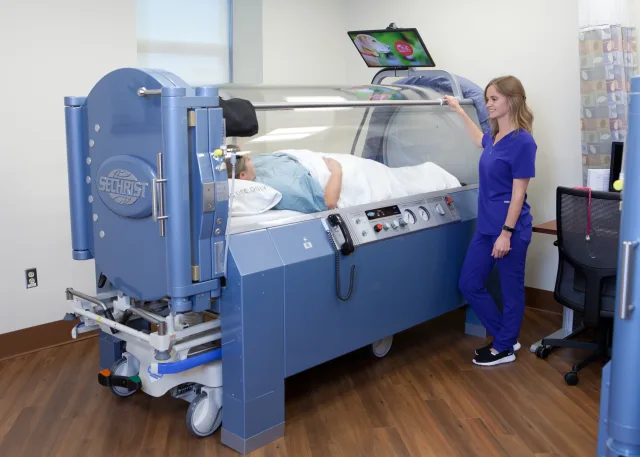
Hyperbaric oxygen therapy can sound like wellness folklore until you see the mechanism — then it reads like a physics lesson. Here it is in three steps.
1. Pressure dissolves gas into liquid
Henry's Law: the amount of gas that dissolves in a liquid is proportional to the pressure above it. At sea level, almost all the oxygen in your blood rides on hemoglobin, which is ~97% saturated — there's no room to add more that way. But at 2.0–2.4 atmospheres breathing 100% oxygen, the plasma itself carries many times its normal oxygen — enough, famously, to sustain life even without red blood cells.
2. Dissolved oxygen reaches what hemoglobin can't
Plasma flows where red cells can't — through narrowed diabetic microvessels, swollen post-radiation tissue, and the edges of compromised grafts. Oxygen-rich plasma re-supplies exactly the starved tissue where healing has stalled.
3. Oxygen switches the repair machinery back on
With fuel restored, fibroblasts lay down collagen, white blood cells kill bacteria effectively again, and — most remarkably — repeated hyperoxic exposure stimulates angiogenesis: the growth of new permanent capillaries. That's why benefits persist after the treatment course ends.
That's the whole trick: physics delivers the oxygen, biology does the rest. The catch is the dose — these effects occur at true therapeutic pressure in medical-grade chambers, which is exactly what we run at Pacific Hyperbarics.