Every year, tens of thousands of Americans lose a limb to a diabetic foot ulcer that started as something small. The single biggest factor separating healed wounds from amputations is time to advanced treatment.
The 30-day rule
If a foot wound hasn't meaningfully improved after 30 days of good standard care — offloading, debridement, infection control — guidelines support escalating to adjunctive therapies. For Wagner Grade 3+ diabetic ulcers, that includes hyperbaric oxygen, and Medicare covers it.
Why diabetic wounds stall
Diabetes narrows and stiffens the small vessels that feed the foot. The wound bed becomes chronically oxygen-starved: cells that should be building new tissue idle, and bacteria thrive. Dressings can't fix an oxygen problem.
What HBOT changes
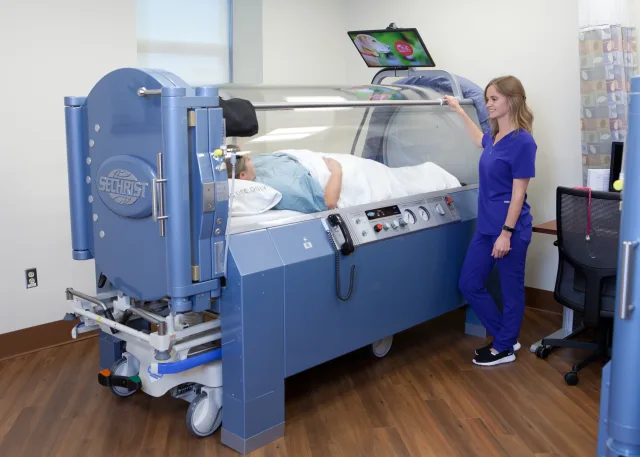
At 2.0–2.4 ATA breathing 100% oxygen, plasma carries oxygen deep into tissue that compromised vessels can't reach — reactivating fibroblasts, supporting white-cell bacterial killing, and stimulating new capillary growth. Across a 30–40 session course, that's frequently the difference between closure and amputation.
If you or someone you love has a foot wound that's lingered past a month, don't wait for it to "turn the corner" on its own. Call (831) 555-0100 — we'll verify your coverage for free and coordinate with your podiatrist.